Thursday, 11 September 2008

What Hubris Does to Foreign Policy


Last Wednesday a secret incursion on the part of a squadron of US Navy Seals (pictured left) resulted in the deaths of approximately 25 'suspected' Al-Qaeda insurgents in Pakistan. The Navy Seals were immediately extracted by helicopter following the raid. Just today an anonymous source confirmed that President George Bush secretly approved orders to conduct incursions into Pakistani territory without the consent of Pakistani authorities. Now that the news is out, the US must be hoping that such a daring raid on the part of the most mythically awesome military organisation in the world will conjure up enough images of crazy Navy Seal ninja shit to deflect major criticism.

This marks one of the most hypocritical breaches of the sovereignty of foreign nations in recent memory. You will recall the heavy criticism the US leveled at Russia for breaching Georgian sovereignty by sending in troops to 'stabilise' the regions of South Ossetia and Abkhazia. The US defends this double standard by claiming that Pakistan has been insufficiently effective at fighting terrorist cells within its own borders. Yet, if the US wishes to be able to enter foreign countries and kill their citizens in order to serve its own interests, it must not get so worked up when Russia does the same. 

Unilateral military incursion into a foreign country's borders was not justified when Russia did it, and it is not justified now, especially when the orders are being given 'secretly'. There is no need for secrecy on this issue. The terrorists already know the US is trying to kill them. The only people the US administration was trying to keep in the dark by giving these orders quietly was the international community.

Wednesday, 10 September 2008

Kim Jong-ILL?

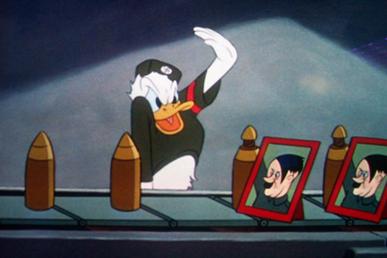
North Korea's 'Eternal President', Kim Jong-Il, failed to attend the 60th anniversary celebrations of his country's founding today, causing a storm of speculation over possible health problems, as well as producing this priceless picture of the dictator and his friends (pictured above). 

A US Intelligence spokesperson has posited that Kim Jong-Il may have suffered a stroke, and that this opened the floor for speculation as to whether the North Korean tyrant was still fit to govern. This observation opens the floor to speculation as to where the fuck US Intelligence has been for the past 14 years. 

Kim Jong-Il, who took over the reins of power after his father's death in 1994, commands the fifth largest standing army in the world, and is known for his canny diplomacy of brinksmanship, his repeated attempts to develop nuclear weapons, and his fondness for vast displays of synchronised dancing, which may or may not have inspired the dance choreography and political message of Britney Spears' single 'I'm a Slave 4 U'. 

His death could mean a breakthrough in a political impasse that has stymied reconciliation attempts between South and North Korea, still formally at war, for over a decade. That's all I'm saying.

Monday, 8 September 2008

The News Stand Nabob

Though not strictly speaking an news item, London based weekly publication The Economist is very much an item of news. (See that? Pretty clever.) The Economist has been setting agendas and informing the minds of the most powerful men in the world for well over a century, since its founding in 1843 by Scottish hatmaker James Wilson. From humble beginnings it has grown into one of the most prestigious publications ever to glare at you disapprovingly from the magazine rack, right next to the last copy of Nuts, so that Mao can show you just how disappointed he is with you(pictured above). 

The Economist is famous for its editorial tilt, which ranges from being called 'moderately monetarist' to 'Ebenezer Scrooge and Margaret Thatcher bumping cocks'. An oft-cited example is its intensely revisionist view on the development of Asian Tiger economies, which holds that the startling development of countries like Japan, South Korea and Taiwan is due to their fundamental openness to foreign trade, and their embracing of the competition of the free market. One has to admire the Oxonian aplomb with which this publication manages to ignore the facts entirely by dint of its overweening tone of British condescension. It's no surprise that the magazine is most popular in the USA (over 50% of its readership), where it is considered the epitome of elite publications.

The problem with The Economist is that it presumes to both summarise a week's worth of political, financial, economic, technological and cultural news in the span of a few dozen articles, and provide an insightful analysis in each of these topics. What results is a rushed, often out-dated publication that relies much more on clever, maverick-sounding judgments than on measured appraisal. In this weeks issue, with only two articles of space with which to cover Sarah Palin's candidacy, an issue which readers will have been saturated with the entire week, The Economist's greatest asset is its editorial style and air of authority. There is rarely anything in The Economist that cannot be gleaned through a fairly regular daily review of the news, and the most useful service the magazine provides is as a weekly manifesto of the opinions a well-read right-wing upper-middle-class man might have on current affairs. 

Ex-Fascist Still Fascist!


In other news, the gargantuan mayor of Rome (pictured left), Gianni Alemanno, has caused some political fracas with his comments concerning fascism, an ideology he once espoused as a member of the MSI, a neo-fascist group formed in the ashes of post-war Italy. In an interview with Italian broadsheet Corriere Della Sera, Alemanno stated that he didn't think fascism itself was 'pure evil', but that the racist and anti-semitic policies brought in under Italian fascism were.

The most interesting thing about this story is the amount of coverage it actually got outside of Italy. It demonstrates the utter ignorance the rest of the world has regarding the way politics is run on the peninsula. Italy is a country whose political system encompasses proud neo-fascists on the one hand and staunch communist doctrinaires on the other. It is a country where an ex-porn star running for office ironically has a cleaner record than most other politicians (in terms of both policy and sexual deviance), and where our Foreign Minister wore a t-shirt printed with the controversial Danish Muhammad cartoons in the midst of the scandal. In other words, it is not a country in which imprudent, lewd, or offensive comments are news. Unless directed at over-sensitive German socialists.

The comments did not cause an uproar. A Reuters news article amusingly refers to 'Italy's Left' creating an outcry, by which they really meant an impressively bearded Communist professor and a few students starstruck by the size of his beard. Of course, the gigantic mayor Alemanno has little to fear from such voices on the margins.

Inscrutable Chinamen Fail in Bid to Oppress Inscrutable Chinamen


The results of the Hong Kong legislative elections have just come out, and the news is good, if varied: between 22 to 24 of the 60 seats have been assigned to the pro-democracy camp of Hong Kong parties, meaning they retain veto power in most legislative procedure, where a 2/3s majority is needed.

This was by no means a certain thing. Beijing was thought to have closed the debate on democracy in Hong Kong by promising universal suffrage by 2017 'at the earliest'. Hong Kong's economic troubles have been a salient issue, with inflation passing 6% and growth slowing down. This has drawn much attention away from the issue of democratic and political autonomy. Apparently this was not enough for the pragmatic and independent Hong Kongites, though, who voted overwhelmingly for pro-democracy parties (only 30 out of the 60 seats were actually up for election).

It could be that the citizens of Hong Kong, long accustomed to the liberal governance of Britain, are unwilling to relinquish the political and social benefits they gained during their period of colonisation. It could be that they consider themselves a different breed to Mainland Chinese, and want to retain autonomy from them. They could still be smarting from the ill-fated attempt on the part of the Beijing Olympic Council to recruit its paralympic team entirely from healthy Hong Kong citizens. Whatever the case may be, Hong Kong citizens have weathered another election clinging to the scraps of their autonomy.

Saturday, 6 September 2008

P-P-P-Party Time!

The headlines have made the situation clear: 'Benazir Bhutto's Widower takes power in Pakistan'. Though this is demonstrative of the extent to which Asif Ali Zardari lives in his deceased wife's shadow, it also goes a long way towards explaining why he holds the reins of power now. 

We were expected to mourn Benazir Bhutto, the putative counterpoint to the dictatorial Musharraf, the beacon stubbornly advocating democracy and free cosmetics for a nation beleaguered by military rule and inappropriate use of foundation. And similarly, we are expected to celebrate the ascent to power of her husband, to whom she presumably passed the torch of mending Pakistan's spirit and restoring its devotion to democracy. Unfortunately, that's all bullshit. 

Doing some cursory research on Bhutto, her husband, and the party they run, reveals more fingers in pies than some sick, freakish Dusseldorf-produced finger-pie fetish porn. The Pakistan People's Party, founded in 2002, has been an unabashed vehicle for the promotion of one family: the Bhuttos. Indeed, the leadership of the party has always belonged to the Bhuttos, even after the assassination of Benazir Bhutto, when the party briefly passed to her adolescent son. This is not a party which is founded on the principles of meritocratic democracy. It is a clear successor to the politics of patronage dominated by a few prominent elite families.

Though the New York Times now strenously denies it, both Benazir Bhutto and Asif Ali Zardari were tried and found guilty of corruption involving gross abuses of power regarding kickbacks received from Polish tractor producers and French military manufacturers. The Bhuttos were sentenced in both Pakistan and Switzerland, with evidence from Polish, Swiss and French authorities. Their assets include a £6.35 million neo-Tudor(sometimes referred to as 'tudorbethan' by art historians, gangsters and pimps) house in Surrey, and undisclosed millions of dollars in Swiss and Dubai banks. Zardari has no governing experience to speak of. This is not democracy as we should know it.

The fact is, though, that Zardari was elected, easily defeating his closest rival, the fantastically named Saeeduzzaman Siddiqui. This is the man the Pakistani people see fit to govern them. And this is the problem. Endemic to most developing states, including many in Africa and Southeast Asia, is the chieftain culture that tolerates and expects elected officials to almost immediately become some of the wealthiest people in the country. Whereas in the West, theoretically at least, elected representatives are expected to adhere to the ethic of service and responsibility, the political culture in countries new to democracy is still redolent of autocracy, and rulership. 

It was an election. It did replace a military dictator. But the election of a man who escaped two corruption convictions on the back of his wife's reputation, who leads an openly dynastic 'political party', who still possesses fantastic ill-gotten wealth in Swiss bank accounts (an amnesty was declared for the corruption charges) but claims to be a socialist, is not the kind of election anyone in the international community should promote, and not one anyone in Pakistan should be happy with. 


Thursday, 4 September 2008

The Autocratic Dark Side of the Bourgeoisie


The situation in Thailand is worsening for Samak Sundaravej, its Prime Minister. After taking power last year at the head of the People's Power Party (PPP), Samak has found his rule to be increasingly under fire. The latest is that Samak has agreed to hold a referendum, although what exactly the referendum will be on is still a matter of debate. Given such strident concessions on the part of the Thai PM, it is hard to see what the opposition, a grassroots organised movement against the government called the People's Alliance for Democracy (PAD), is complaining about.

We are used to seeing grassroots protest movements as the voice of the disenfranchised poor rising up to strike back at the elites that have exploited them for so long. At least this is the explanation the average member of Respect will give you before ordering his post-protest McSandwich with Coke. But Thailand, the self-proclaimed ''Land of Smiles'', and the only country that considers its eerily realistic transexuals a source of constant national pride, has once again turned things inside out. As it were.

The PAD, the opposition movement to Samak's regime, is actually a conglomerate of middle-class interests. Thaksin Shinawatra, Samak's predecessor, was a self-proclaimed champion of the working class and the rural poor. Samak shares Thaksin's political base, and this support for farmers and other low-class Thais has irritated the Bangkok-based bourgeoisie. The result is the PAD, which is led by one of Thailand's biggest media magnates, and which has made demands that 70% of the parliament be appointed, rather than democratically elected. 

These kinds of autocratic demands are symptomatic of a society where the bourgeoisie considers itself of an entirely different (and superior) breed to the working class, and is dissatisfied with a democratic system that essentially gives power to the majority, which is in all cases the poorest section of society. Their efforts can be seen to be an effort to use their political clout outside of the electoral system, where they feel their inferior numbers give them little chance of promoting their own interests. 

In any case, Samak is having a worse time in Thailand than Gary Glitter did, and you can see the strain showing as he quotes Shakespeare at a BBC reporter. He'll have to find a way to reconcile rural populism with urban middle-class interests if he wants to stay in power.


Wednesday, 3 September 2008

Enter the Racist Dragon


The Prime Minister of Japan Yasuo Fukuda announced his resignation yesterday, and this has sparked yet another leadership struggle in Japanese politics. You will recall Junichiro Koizumi, who was PM of Japan until 2006, when he was replaced by Shinzo Abe, Japan's foremost David Schwimmer impersonator. Abe in turn resigned last September, following intense political pressure in the wake of Agricultural Minister Toshikatsu Matsuoka's suicide. He was replaced by Yasuo Fukuda, who has led the Liberal Democratic Party of Japan, and the country, until yesterday. His most likely successor will be Taro Aso, who already has the support of 22 of Japan's 47 prefectures.

Taro Aso is a foreign-educated Roman Catholic with a history of controversial (read bigoted) statements concerning race, ethnic stereotypes, and nationalist sentiment. What Boris Johnson is to the Conservative Party, Taro Aso is to a grouping of cunts. One would think that the lesson of turning to strong yet radical leaders in times of political turmoil would have been one well-learned. Perhaps that's too harsh a judgment to make of the Japanese, though. The political system of Japan is much more given to party succession than to radical shifts in power (for examples of that, see Italy's tortured parliamentary system). The Liberal Democratic Party in Japan has been in power since 1996, and it shows no serious signs of leaving. Taro Aso is a careerist within the LDP, having been a party member since 1976, and working his way up the ranks to being the Foreign Minister. Aso's presidency is not going to be the salve that Japan's irritated politics needs at the moment, but neither is it a sign of worrying political polarisation.

Trouser Browsing

Today I downloaded Google Chrome. After digging my way through the 30-page comic-book style explanation of the new features of the browser and why it's a complete overhaul, presenting a whole new philosophy of browsing, I finally got around to tinkering with it. Why, even now I am writing from within the confines of this brand new interweb experience. 

It's aright, but now I'm left with the distinct sense that Technology is leaving me behind. The comic-book explanation was written in a tone that suggested that the information it was assuming was blindingly obvious, and laid out in a way that implied that its target audience was people in their teens. I found it opaque and impenetrable, and only with the help of an intrepid friend did I end up making any real sense of it. I can't help but think that the vast majority of adolescents and young adults out there now are intimately familiar with the internet and all it's components that only seem to frighten and anger me.  

So overall, I'm not sure that downloading Google Chrome was a smart move. At least I felt on top of things with Firefox. I knew how to download a plug-in, I knew how to activate said plug-in. Now, like a boy playing Street Fighter II Alpha with his one friend for years, I am thrust into a Japanese arcade. Fresh meat.

Monday, 1 September 2008

The Charm of Territorial Integrity


So why is it that Georgia, a small, corrupt Eurasian country in what is effectively the geographical equivalent of the devil's asshole has been championed as a brave and defiant victim of Russian imperialist aggression? From the news saturation of the Russian recognition of the breakaway regions of Abkhazia and South Ossetia, we are led to believe that Russia has engaged in an unconscionable and lawless act by supporting the independence of these two regions.

But of course, national self-determination is a right for Kurdish peoples, for East Timorians, and even Palestinians. Why do the South Ossetians and Abkhazians need to put up with Georgian control? Both regions have had referendums voting overwhelmingly in favour of secession, but of course, Georgia is under no legal international obligation to recognise these attempts at self-determination. What we are seeing from the USA and Europe is an attempt to use the 'old' politics of state sovereignty and non-interference that they have so thoroughly flouted over the past decade to condemn Russia's admittedly mercenary actions in the region.

There are no heroes here, and no villains. Georgia's president is trying to crush secessionism within its borders and pacify the regions of South Ossetia and Abkhazia. Their attempts to do this by military force backfired when Russian troops intervened on supposedly humanitarian grounds and kicked the Georgians out, going on to the rest of Georgia proper in order to 'stabilise' the situation. And yet, in this situation of moral ambiguity, the British press comes down heavily in favour of Georgia and its scum-sucking American puppet, Mikheil Saakashvili, who has been all too eager to level accusations of imperialist aggression at Russia whilst quietly ignoring his own autocratic excesses. There has been ample coverage of Georgian demonstrators decrying this move by Russia, but little to no coverage of Abkhazian and South Ossetian points of view. Let's be clear and ask the question repeatedly: why is it unacceptable for a region to declare independence if the vast majority of its inhabitants wish it so?